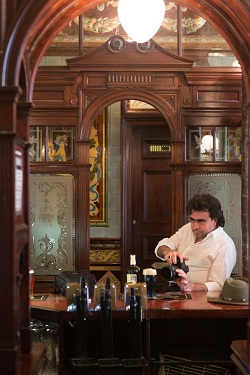
Italy is resplendid with history, food and drink. Regional differences can be stark - especially as you travel from North to South. These are just 10 of the best places I've been to in Italy. There's many more great places and I'm trying to get there.
-
 Rome
-
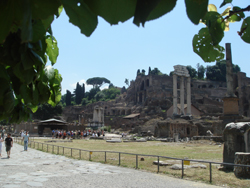
One of the most historic cities in the world and one
time "Caput Mundi" - the Capital of the World.
Roman history spans the fat end of 3,000 years, so theres
plenty of archeological sites to be seen - the Roman
Forum and the Colloseum perhaps most notably. The Vatican
City is surrounded by
Rome
-
the Swiss Guards at St Peters Basilica and the Vatican
Museums are must visits for both pilgram and tourist
alike.
Rome
-
One of the most historic cities in the world and one
time "Caput Mundi" - the Capital of the World.
Roman history spans the fat end of 3,000 years, so theres
plenty of archeological sites to be seen - the Roman
Forum and the Colloseum perhaps most notably. The Vatican
City is surrounded by
Rome
-
the Swiss Guards at St Peters Basilica and the Vatican
Museums are must visits for both pilgram and tourist
alike. -
Venice - Once the power house of the Adriatic Sea, Venice is now better known as a canal-based tourist destination. History is tangible in The Bridge of Sighs The Doges Palace, St Marks Square and the Basilica of Saint Mark. Venice also brought Titian and Tinoretto - two of the greatest painters of the Renaissance period - to the world. Do take one Gondola ride - even if the Gonodliere isn't Venetian. Beautiful as Venice is, and a sure fire hit for any first-time visitor to Europe, theres more than a touch of a Leicester Square Experience to it.
-
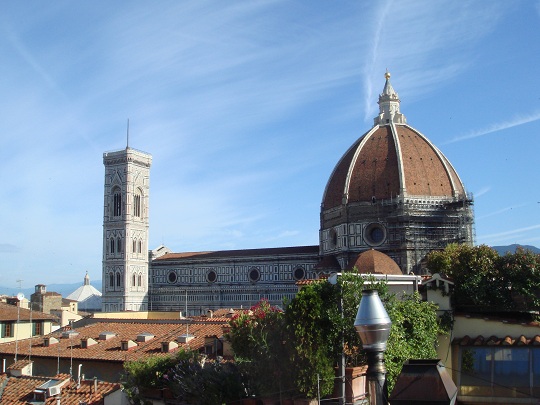
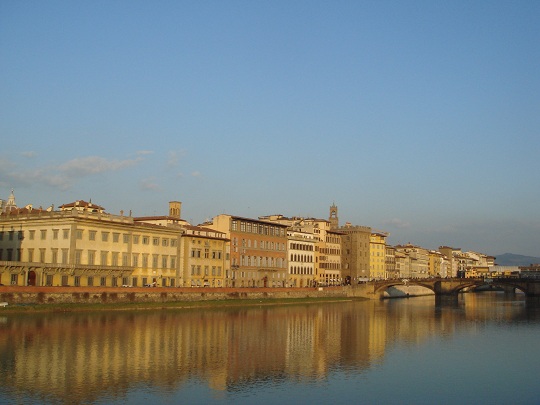
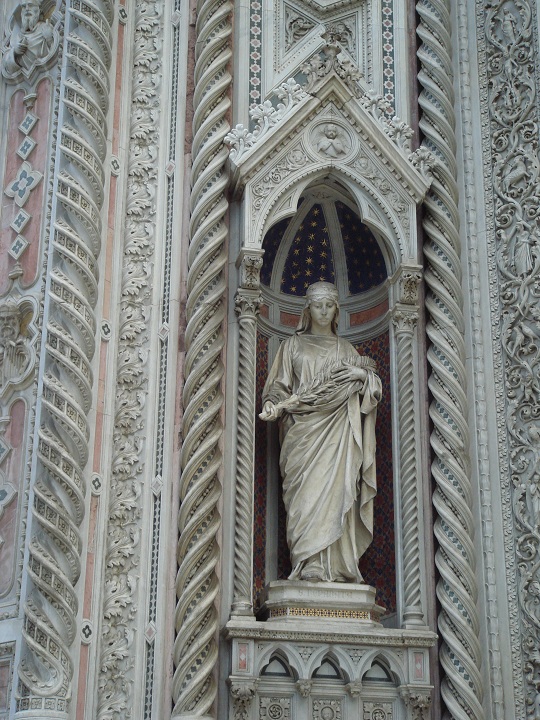
 Florence -
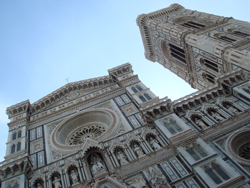
Refered to as "The Cradle of the Rennaissance" on
account the monuments, churchs and buildings around the
town. Central Florence is inscribed on the UNESCO
World Heritage List and is home to the both the cavernous
Duomo and the Bapistry. The Uffizzi
Gallery, Accademia are
home to some of the worlds greatest collections of art
including works by Botticelli, Giotto, Michelangelo,
Raphael and Titian. Michelangelos David is housed in
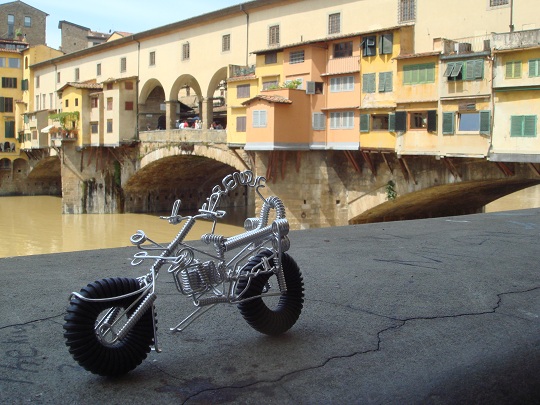
the Accademia Museum. Don't miss the Boboli Gardens and
the Palazzo Pitti accross the Ponte Vecchio.
Florence -
Refered to as "The Cradle of the Rennaissance" on
account the monuments, churchs and buildings around the
town. Central Florence is inscribed on the UNESCO
World Heritage List and is home to the both the cavernous
Duomo and the Bapistry. The Uffizzi
Gallery, Accademia are
home to some of the worlds greatest collections of art
including works by Botticelli, Giotto, Michelangelo,
Raphael and Titian. Michelangelos David is housed in
the Accademia Museum. Don't miss the Boboli Gardens and
the Palazzo Pitti accross the Ponte Vecchio. -
Assisi - Home to St Francis, founder of the Fransiscan religous order, Assisi is a major place of pilgramage and of Christian history. The Basilica of San Francesco d'Assisi is a World Heritage Site and construction of the Upper and Lower Churches began in 1228 - the year of St Francis' canonization. The remains of St Francis are interned in the crypt of the basilica. The interiors, with their frescoes by Ciambue and Giotto, are unmissable.
-
 Turin -
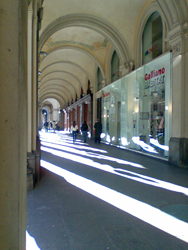
One time capital of the Duchy of Savoy and, later, of
a reunified Italy, Turin is a historic city much overlooked
by visitors to Italy. The Royal history of Turin is visible
in the Royal Palace and the Royal
Church of San Lorenzo. Turin Cathedral is, of course,
home to the famous "Turin Shroud" which has
been the subject of much controvesy over whether it really
was the shroud which contained the body of Christ or
not.
Turin -
One time capital of the Duchy of Savoy and, later, of
a reunified Italy, Turin is a historic city much overlooked
by visitors to Italy. The Royal history of Turin is visible
in the Royal Palace and the Royal
Church of San Lorenzo. Turin Cathedral is, of course,
home to the famous "Turin Shroud" which has
been the subject of much controvesy over whether it really
was the shroud which contained the body of Christ or
not. -
Como - Situated on the southern end of the southwest leg of Lake Como, Como was founded in the 1st Century by the Romans. The Duomo, flanked by statues of Pliny the Elder and Pliny the Younger, and the Romanesque San Fedele are both worth visited for their architectural virtues. The Cistercian Sant'Agnostino, although heavily renovated in the 20th Century is home to frescoes from the 15th to 17th Centuries. The basilica of Sant'Abbondio, contains paintings from the 11th Century and frescoes from the 14th.
-
San Gimignano - Perched on hill above the Elsa Valley, the one time Etruscan village takes it name from from a 10th Century Holy Bishop of Modena - San Gimignano - who is credited with saving the town from rampaging barbarians. Situated along a trading and pilgramage route, "Via Francigena," the town propsered which allowed for the churches and monastries to be decorated. While the architecture was clearly influenced by Siena, Pisa and Florence, San Gimignano is most well known for the towers which dominate its skyline. From the 52 towers which were built between the 11th and 13th century, only 14 remain including the climbable Torre del Podestà or Torre Grossa - the latter is 54 feet in height. While much of Italy is known for its red wine, including the nearby Chianti region, San Gimignano is best known for its white wine - Venaccia di San Gimignano - which is definatly worth a try while you're here!
-
 Siena -
Central Siena is yet another Italian UNESCO
World Heritage site. The Duomo is one of the finest
examples of Italian Romanesque architecture. The façade
(pictured) was completed in 1380 and the Cathedral is
now home to a famous octagonal pulpit designed by Nicola
Pisano. The interior is beautifully decorated with an
elaborate mosaic floor and the Piccolomini Library is
an absolute don't miss - it's elaborate and difficult
to imagine the skill and work that went into it. Duccio's
famous Maestà can be seen in the Museo dell'Opera
del Duomo. The Piazza del Campo, mostly the local Leicester
Square during the year, each year plays host to the dramatic
Palio horse race which I hope to get to one day.
Siena -
Central Siena is yet another Italian UNESCO
World Heritage site. The Duomo is one of the finest
examples of Italian Romanesque architecture. The façade
(pictured) was completed in 1380 and the Cathedral is
now home to a famous octagonal pulpit designed by Nicola
Pisano. The interior is beautifully decorated with an
elaborate mosaic floor and the Piccolomini Library is
an absolute don't miss - it's elaborate and difficult
to imagine the skill and work that went into it. Duccio's
famous Maestà can be seen in the Museo dell'Opera
del Duomo. The Piazza del Campo, mostly the local Leicester
Square during the year, each year plays host to the dramatic
Palio horse race which I hope to get to one day. -
Milan - The centre of Milan revolves around Piazza Duomo (Cathedral Square.) The Cathedral itself, the Palazzo Reale and the Galleria Vittorio Emanuele II shopping arcade are all alongside the Square. Of course, the Cathedral dominates the Piazza and is a must visit. Don't miss the Duomos magnificent stained glass windows and the archeological site which contains remains of the original church.
-
 Pisa -
Famed for its Leaning Tower - Pisa is a popular destination,
usually as part of a larger tour of Italy or Tuscany.
The Piazza del Duomo constitutes yet another Italian
addition to the UNESCO
World Heritage list. The Bapistry, romanesque Cathedral,
Campanile ("The Leaning Tower") and cemetary
all form a cohesive space around the well kept lawn.
Don't be surprised to find people around the Leaning
Tower performing Tai Chi in front of the cameras to show
themselves keeping the Tower up. It's no longer possible
to climb the Tower but there's much conservation and
stabilisation work going on to keep it standing - or
at least not falling over.
Pisa -
Famed for its Leaning Tower - Pisa is a popular destination,
usually as part of a larger tour of Italy or Tuscany.
The Piazza del Duomo constitutes yet another Italian
addition to the UNESCO
World Heritage list. The Bapistry, romanesque Cathedral,
Campanile ("The Leaning Tower") and cemetary
all form a cohesive space around the well kept lawn.
Don't be surprised to find people around the Leaning
Tower performing Tai Chi in front of the cameras to show
themselves keeping the Tower up. It's no longer possible
to climb the Tower but there's much conservation and
stabilisation work going on to keep it standing - or
at least not falling over.