You
get to see one one of the most amazing natural phenonoma -
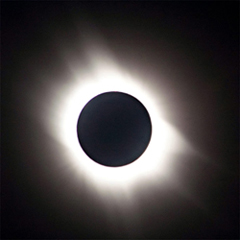
A total solar eclipse is one of the most amazing
natural phenonema that you'll ever see. There's nothing
else quite like it. Every eclipse is a different
length - which is one of the most noticeable differences
from eclipse to eclipse. As totality approaches,
the environment noticably changes. Temperature drops
of over 10 degrees are not uusual. You'll be able
to see "Bailey Beeds" - which is where
light from the sun breaks through the uneven surface
of the moon. The diamond ring effect marks the beginning
and end of totality as a bright flash of light and
is one of the most amazing parts of the eclipse.
A different experience every time - The environment
noticably changes during an eclipse. If animals are
around (as they were in China)
they'll make preparations to goto sleep as though it
were night time - in contrast there were no animals
during our trip to the Libyan desert in 2006 but we
did get a 360 degree sunset effect. With totality approaching,
the temprature will drop noticeably - 10 degrees is
not unusual. Shadow bands (wavy lines of alternating
light and dark) are often also present during solar
eclipses – they were very noticeable in Libya and
not present at all at Hangzhou. Shadows cast
on the ground will appear to be much harsher than usual
and the edges will be very well defined.
Eclipses aren't just for astronomers - Right
enough, the "Instrument Wallahs" will be
there - but don't let that put you off and don't disturb
them when they're setting up their kit or during totality.
(You have been warned!) Trust me on this - the spectacle
of seeing one of the worlds most phenomenal, errr,
phenoma (different every time!) while globe-trotting
around the world isn't enough to keep you happy then
there's no helping you. You don't have to be an astronomer
to appreciate the spectacle or change in enviornment.
Photographic challenge - Practice
safe sun (your retina is delicate
and irreplaceable) if you want to observe or photograph
any eclipse. There's several ways you can approach
this challenge. Even with a simple point and shoot-type
camera, it's possible to get some pretty good shots
of the environment. Peruse eclipse
pictures on Flickr for an idea of what you
can achieve. A long lens and tripod are necessary
if you want to photograph the eclipse itself -
but the efforts are usually worth it. There's some
exellent imagery from the 2006 Solar Eclipse right
here and here which
shows you what can be achieved.
Solar eclipses - and why you must chase them
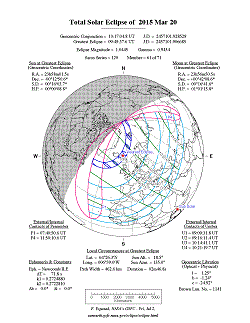
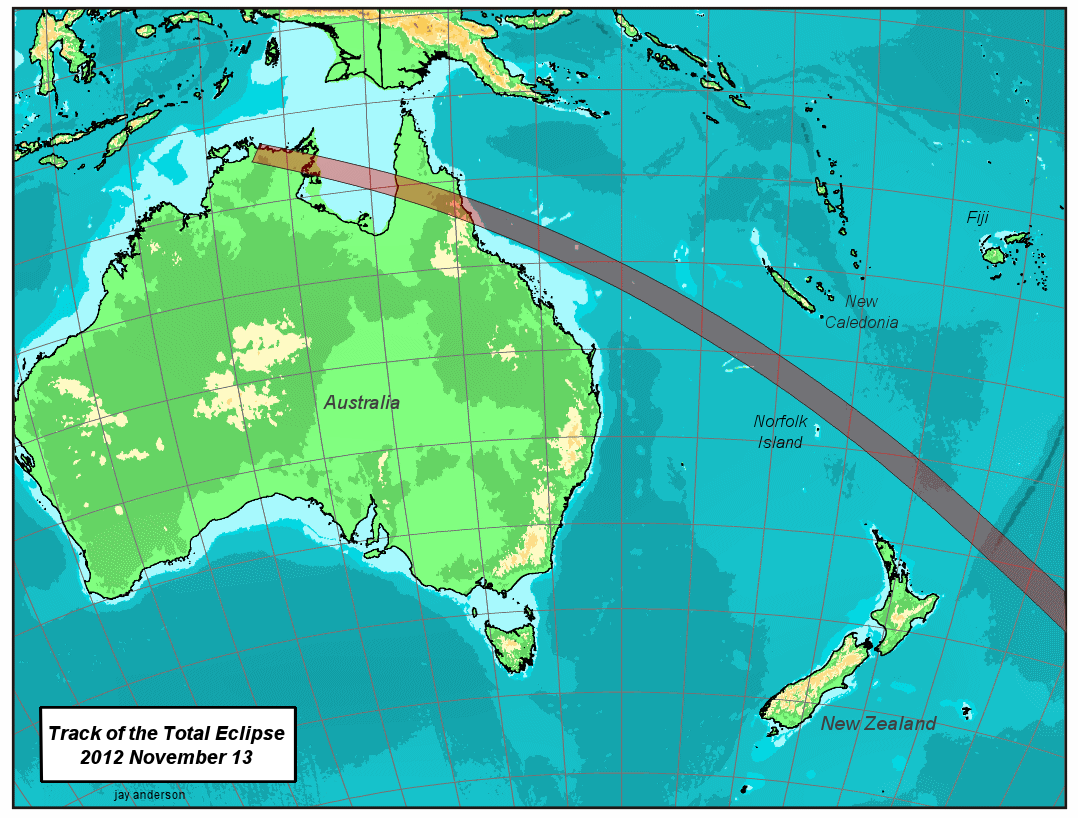
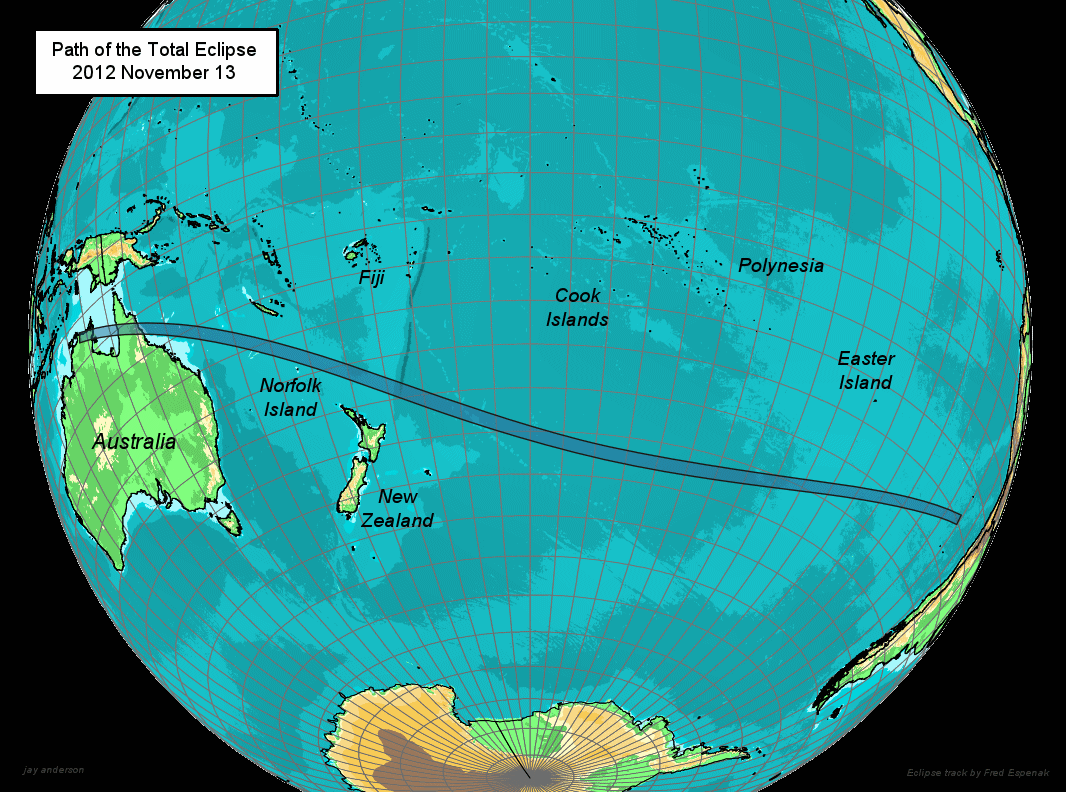
You get to travel all over the world - Recent eclipses have been visible in Libya (2006), China (2009), Easter Island in 2010. Upcoming eclipses will be in Queensland in 2012, Spiztzbergen in 2015, Indonesia in 2015, across the mainland United States in 2017 and, finally, Chile / Argentina in 2019. That doesn't even include annular or partial eclipses. You don't get much more diverse than that.
A different experience every time - The environment noticably changes during an eclipse. If animals are around (as they were in China) they'll make preparations to goto sleep as though it were night time - in contrast there were no animals during our trip to the Libyan desert in 2006 but we did get a 360 degree sunset effect. With totality approaching, the temprature will drop noticeably - 10 degrees is not unusual. Shadow bands (wavy lines of alternating light and dark) are often also present during solar eclipses – they were very noticeable in Libya and not present at all at Hangzhou. Shadows cast on the ground will appear to be much harsher than usual and the edges will be very well defined.
Eclipses aren't just for astronomers - Right enough, the "Instrument Wallahs" will be there - but don't let that put you off and don't disturb them when they're setting up their kit or during totality. (You have been warned!) Trust me on this - the spectacle of seeing one of the worlds most phenomenal, errr, phenoma (different every time!) while globe-trotting around the world isn't enough to keep you happy then there's no helping you. You don't have to be an astronomer to appreciate the spectacle or change in enviornment.
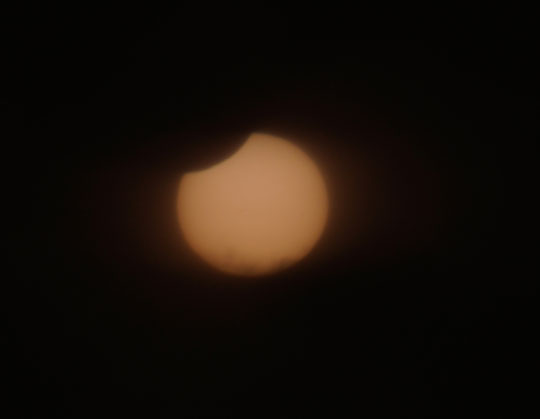
Photographic challenge - Practice safe sun (your retina is delicate and irreplaceable) if you want to observe or photograph any eclipse. There's several ways you can approach this challenge. Even with a simple point and shoot-type camera, it's possible to get some pretty good shots of the environment. Peruse eclipse pictures on Flickr for an idea of what you can achieve. A long lens and tripod are necessary if you want to photograph the eclipse itself - but the efforts are usually worth it. There's some exellent imagery from the 2006 Solar Eclipse right here and here which shows you what can be achieved.
Related posts