There's a huge amount to see and do in Rome and, as a sole-person running this site, I couldn't possibly deal with everything. What follows are what I consider to be 14 must-sees in Rome - in no particular order.
-
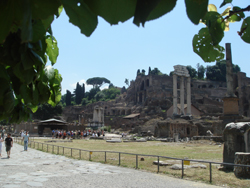 Ancient
Rome - The ancient city of Rome is home to
where, according to legend, Rome was founded by Romulus
and Remus in 753 BC on the Palatine Hill. The Roman
Forum, between the Palatine and Capitoline Hills
is home to oldest and most important buildings of
the Roman period including the residence of the Kings
(The Regia) and the complex of the Vestal Virgins.
Palatine Hill, the founding hill, is home to Augustus
palace - much in ruins now - but the size and scale
of the palace and the "Games Room" are
much in evidence. Don't miss the House
of Augustus - an impressive restored frescoe
from the house of Augustus, who would become
Rome's
first Emporer.
Ancient
Rome - The ancient city of Rome is home to
where, according to legend, Rome was founded by Romulus
and Remus in 753 BC on the Palatine Hill. The Roman
Forum, between the Palatine and Capitoline Hills
is home to oldest and most important buildings of
the Roman period including the residence of the Kings
(The Regia) and the complex of the Vestal Virgins.
Palatine Hill, the founding hill, is home to Augustus
palace - much in ruins now - but the size and scale
of the palace and the "Games Room" are
much in evidence. Don't miss the House
of Augustus - an impressive restored frescoe
from the house of Augustus, who would become
Rome's
first Emporer. -
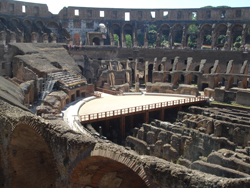
The Colloseum - once the most important "entertainment" venue in ancient Rome where gladiators fought and Christians were executed by Romans. The Colloseum is, without a shadow of a doubt, one of the most recognisable sites in Rome and an absolute must see for any visitor to this marvellous city.
-
 St
Peters Basilica - St Peters Basilica is the centre
of the Roman Catholic Church and a major place of pilgramage
for Catholics worldwide. Built above St Peters grave,
the site of St Peters is significant in Christianity,
and many Popes are buried in the visitable crypt of
St Peters. St Peters Basilica was worked on by legendary
artists and architects such as Bramante, Michelangelo,
Raphael and Bernini. Adjacent to Vatican Museums which
house a whole manner of treasures and the iconic Sistine
Chapels and the famed Raphael Rooms. Whatever your
opinions of religon, Basilica San Pietro is a work
of art and a profound statement of faith.
St
Peters Basilica - St Peters Basilica is the centre
of the Roman Catholic Church and a major place of pilgramage
for Catholics worldwide. Built above St Peters grave,
the site of St Peters is significant in Christianity,
and many Popes are buried in the visitable crypt of
St Peters. St Peters Basilica was worked on by legendary
artists and architects such as Bramante, Michelangelo,
Raphael and Bernini. Adjacent to Vatican Museums which
house a whole manner of treasures and the iconic Sistine
Chapels and the famed Raphael Rooms. Whatever your
opinions of religon, Basilica San Pietro is a work
of art and a profound statement of faith. -
Vatican Museums - The Vatican Museums are, without a shadow of a doubt, amongst the most impressive museums in the world. Home to the Raphael Rooms (of the "School of Athens" fame) and Michelangelo's famed Sistine Chapel, the Vatican Museums also house an impressive Egyptian collection and a beautiful map room.
-
Pantheon - The Pantheon is one of the most important ancient structures in Rome. The dome of the Pantheon remains the largest dome to be built without the aide of scaffolding. Originally built as a temple to all the Gods (Pan -all- Theos -gods) The Pantheon now functions as a Catholic Church.
-
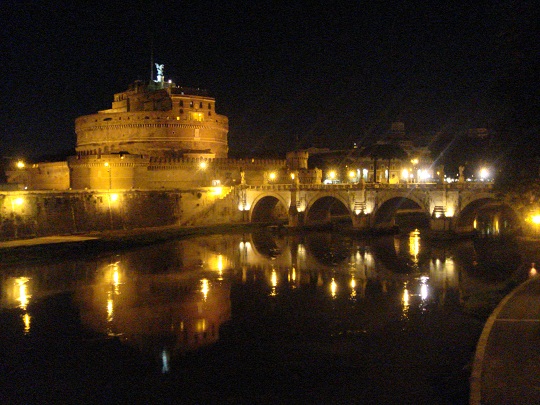
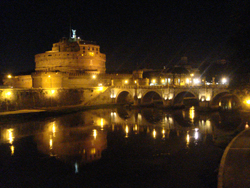 Castel
Sant'Angello - Originally built as the mauseleom
for the Emperor Hadrian and later fortified as a Castle
served as a fortress to protect the Popes when
Rome
came under attack. Walking around the circular fortifications,
you are afforded fantastic views across
Rome
including
the Basilica of St Peter and Pont Sant'Angelo - which
boasts statues from the workshop of Gian Lorenzo Bernini.
Castel
Sant'Angello - Originally built as the mauseleom
for the Emperor Hadrian and later fortified as a Castle
served as a fortress to protect the Popes when
Rome
came under attack. Walking around the circular fortifications,
you are afforded fantastic views across
Rome
including
the Basilica of St Peter and Pont Sant'Angelo - which
boasts statues from the workshop of Gian Lorenzo Bernini. -
Via del Corso - The Via del Corso is well known as one of Rome's best shopping streets - the Roman answer to Oxford Street.
-
Vittoriano - Variously nicknamed "The Typewriter" and the "Zuppa Inglese," Vittoriano holds The Tomb of the Unknown Soldier. Built after the First World War, Vittoriano has been subject of its fair share of controvesy as its construction required the demolition of a large section of the Capitoline Hill and a medieval section of town. Visible from most of Rome it's sometime said that the most beautiful place in Rome is on top of Vittoriano as it's the only place you can't see it.
-
 Campo
di Fiori - Serving as a food and flower market
by day "Il Campo" transforms into a vibrant
piazza with cafes and bars by evening. If you're a
foodie / flowery type do visit by day or if you fancy
somewhere to watch the world go by over a nice glass
of wine, visit by evening. If you're a foodie / flowery
/ wino type spend the day.
Campo
di Fiori - Serving as a food and flower market
by day "Il Campo" transforms into a vibrant
piazza with cafes and bars by evening. If you're a
foodie / flowery type do visit by day or if you fancy
somewhere to watch the world go by over a nice glass
of wine, visit by evening. If you're a foodie / flowery
/ wino type spend the day. -
Piazza Spagna - Named Piazza Spagna due to the proximity of the Spanish Embassy, the Piazza Spagna is one of the most beautiful Piazza in Rome dominated, as it is, by the sweeping Spanish Steps which lead up to Trinità dei Monti church. English poet John Keats lived and died at an apartment adjacent to the Piazza Spagna in 1821.
-
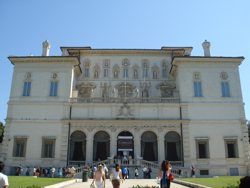 Galleria
Borghese - The Galleria Borghese is justifiably
one of
Rome's
premier art galleries. The sculptures
by Canova and Gian Lorenzo Bernini and painting by
Carravaggio, without a doubt, justify its position
as a must see in
Rome.
Many of the works on display
were commissioned by Cardinal Borghese for this residence
and gardens which he established. Scipione Borghese,
as Pope Nephew and noted art collector, was an early
patron of many latterly prominent artists and sculptors
and established both this residence for his artwork
and the gardens which surround it. Book your tickets
in advance though - only 200 people per hour are
allowed in.
Galleria
Borghese - The Galleria Borghese is justifiably
one of
Rome's
premier art galleries. The sculptures
by Canova and Gian Lorenzo Bernini and painting by
Carravaggio, without a doubt, justify its position
as a must see in
Rome.
Many of the works on display
were commissioned by Cardinal Borghese for this residence
and gardens which he established. Scipione Borghese,
as Pope Nephew and noted art collector, was an early
patron of many latterly prominent artists and sculptors
and established both this residence for his artwork
and the gardens which surround it. Book your tickets
in advance though - only 200 people per hour are
allowed in. -
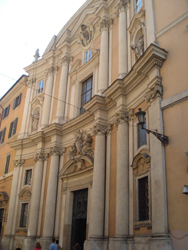
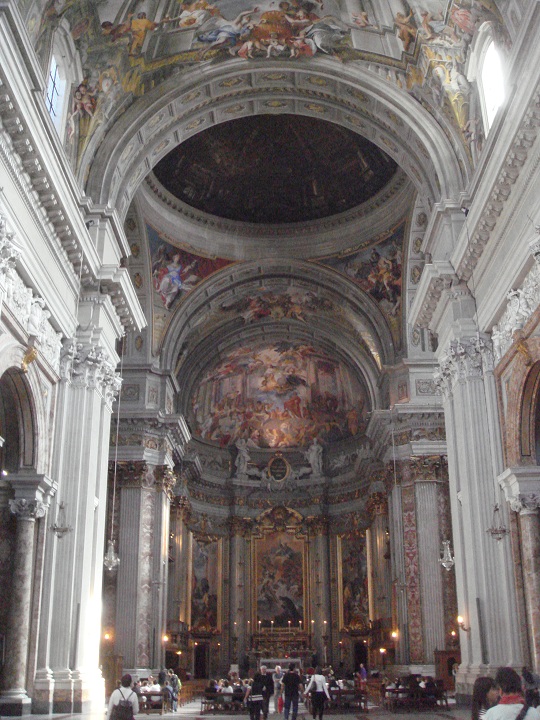
Piazza Navona - Located on the one time site of a Roman circus, Piazza Navona is the most beautiful Piazza in Rome. Well proportioned and decorated with three symettrically placed fountains of which the most famous is Fountain of the Four Rivers. Designed by Gian Lorenzo Bernini and sporting an Egyptian Obelisk the Fountain of the Four Rivers sits directly in front of the impressive Sant'Agnese in Agone designed by Girolamo Rainaldi.
-
 Trevi
Fountain - The largest Baroque fountain in
Rome
standing an impressive 29.5 meters (85 feet) high and
19.8 meters (65 feet) wide. Famous not only for its
aesthetic beauty, Audrey Hepburn got her hair done
over the road for the 1963 film Roman Holiday. Aside
from the fountains in Piazza Navona this is my favorite
Roman fountain and certainly
Rome's
most impressive.
Trevi
Fountain - The largest Baroque fountain in
Rome
standing an impressive 29.5 meters (85 feet) high and
19.8 meters (65 feet) wide. Famous not only for its
aesthetic beauty, Audrey Hepburn got her hair done
over the road for the 1963 film Roman Holiday. Aside
from the fountains in Piazza Navona this is my favorite
Roman fountain and certainly
Rome's
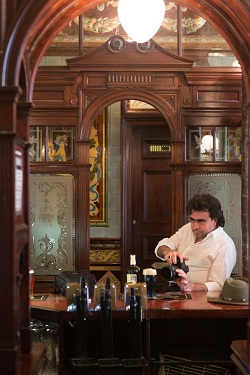
most impressive. Cafe Greco - Once the hangout of such literary luminaries as John Keats and Percy Shelley who lived in nearby Piazza Spagna, the Cafe Greco is an odd mix of tails and tourism - tourists are served their coffees by older gentlemen in morning suits. There's a good range of teas and a most enjoyable range of paintings adorning the walls of the cafe. While there's much literary history, there's more than a touch of Leicester Square.