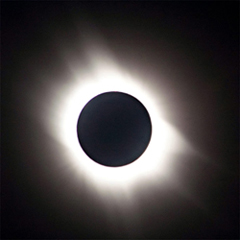
Total Eclipse. A total eclipse occurs when the Moon
completely obscures the Sun. The disk of the sun is replaced,
instead, by an outline of the moon. The Corona, a much fainter
outline of the sun, is only visible. This occurs when the
Moon is relatively close to Earth.
Annular Eclipse. When the Sun and Moon are exactly
in line but the moon is relatively further from the Earth
- i.e. it's apparent size is smaller than that of the Sun.
This causes the effect that the Sun appears as a very bright
ring, or annulus, around the moon.
Hybrid Eclipse. A hybrid eclipse is a cross between
a total and annular eclipse. From some parts of Earth, the
eclipse is total and in others it is Annular. Hybrid eclipses
are quite rare and short in duration.
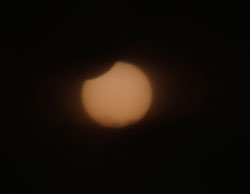
Partial Eclipse. When the moon and sun are not exactly
in line, the moon only partially obscures the Sun. Outside
of the path of totality, partial eclipses are visible from
a large expanse of the earth. However, some eclipses are
only ever partial as the shadow, or umbra, never crosses
the Earths surface. Partial eclipses are less dramatic than
total eclipses.
What happens during a total solar eclipse?
During a total solar eclipse, the sky will darken and the
air will cool. During a total eclipse, animals and birds react
to the change in the climate and will often be seen preparing
for and going to sleep - as though it were night - and awaking
at the end of the eclipse.
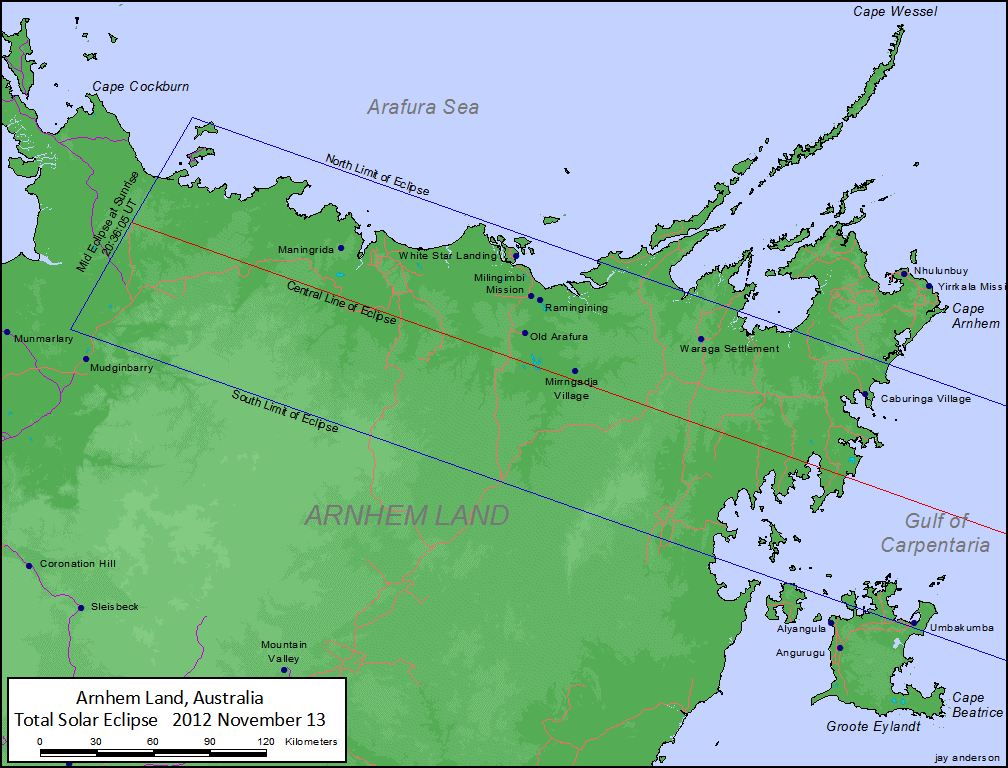
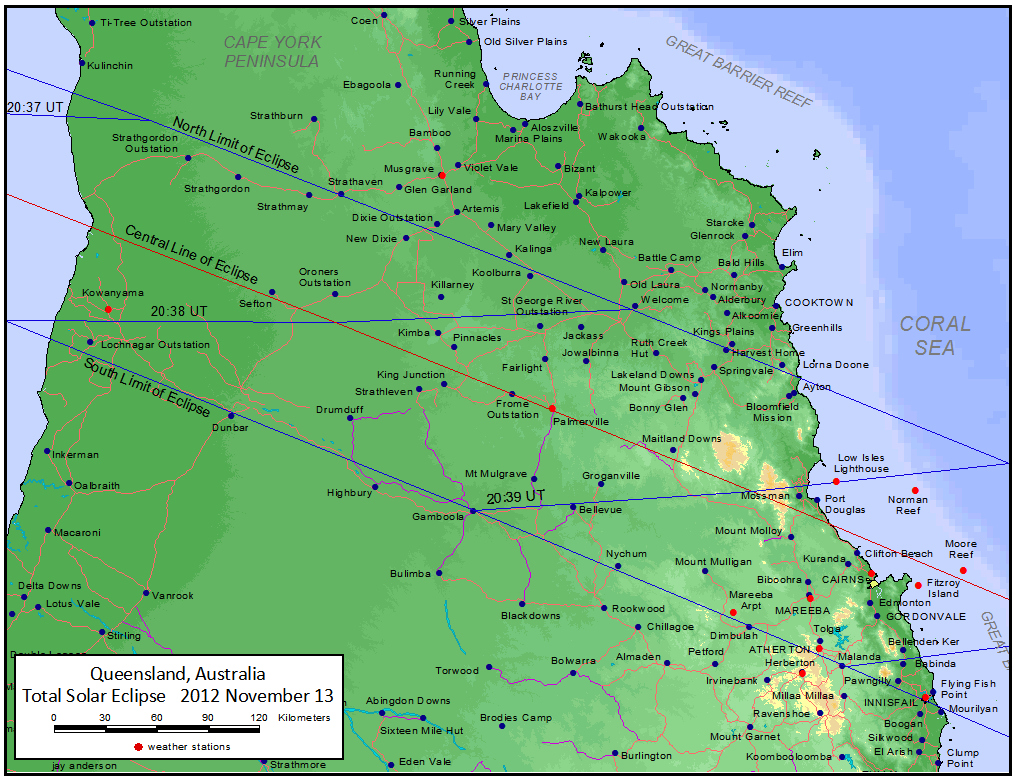
How large is the area I can see totality from?
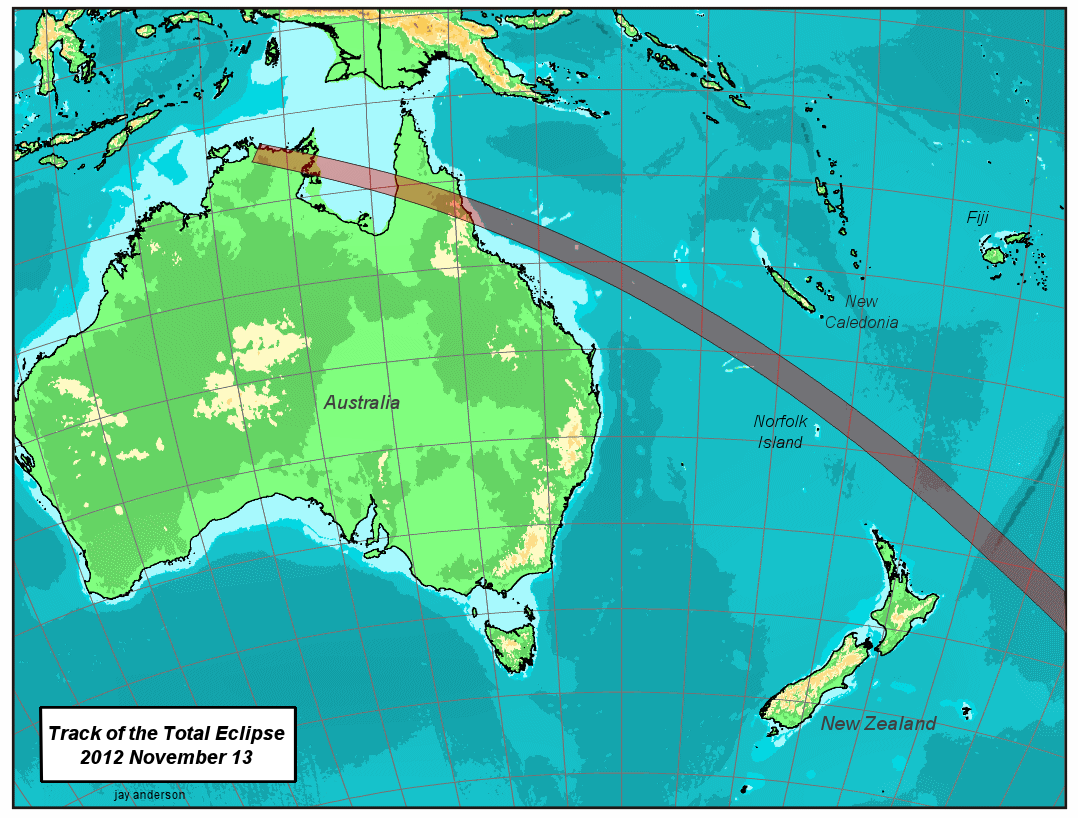
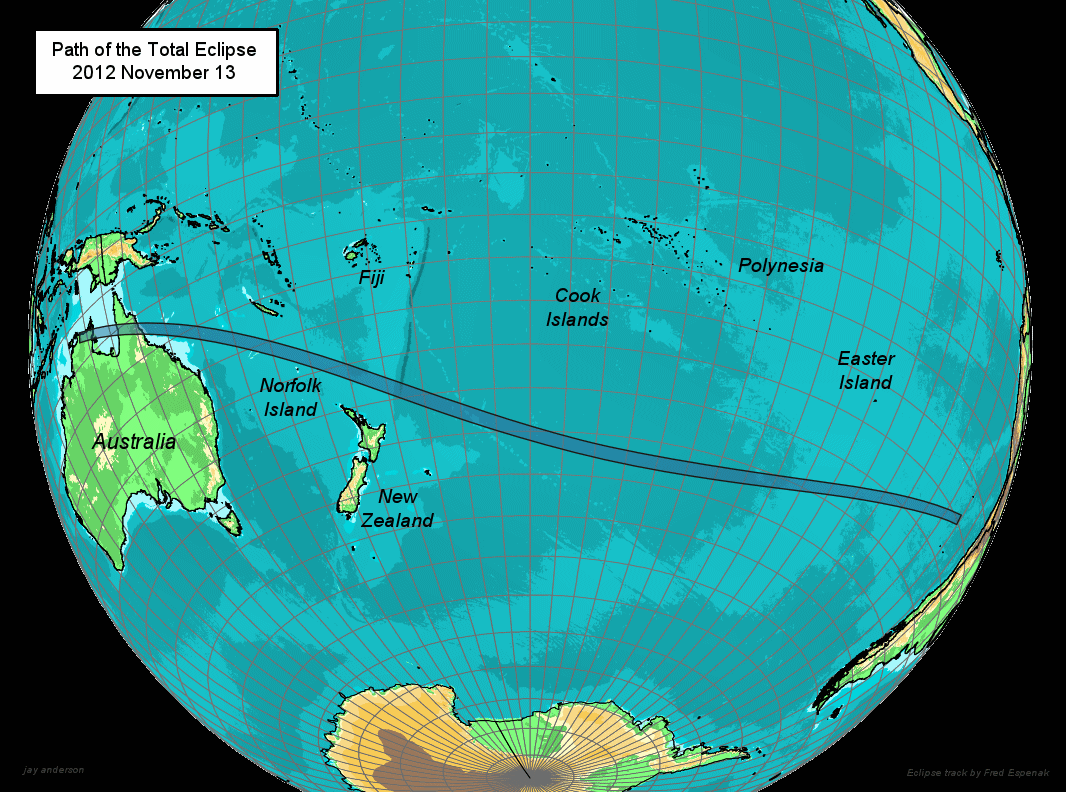
Totality is the period of time when the moon totally covers
the sun. The path along which one can see totality is usually
less that 200km wide. However, in 2009 this
path will be as wide as 258 km.
Outside of this band, a partial eclipse is visible.
Further solar eclipses will occur for many years after this,
but I simply haven't had time to add information about those
eclipses yet.
For the purposes of this site I have concentrated on soley
on total solar eclipses. If I ever have the time or
inclination I may put up some information on other eclipse
types but I will probably come to the conclusion that that's
beyond the scope of this site.
Solar eclipses - occurances and types
What types of solar eclipse are there?
What happens during a total solar eclipse?
During a total solar eclipse, the sky will darken and the air will cool. During a total eclipse, animals and birds react to the change in the climate and will often be seen preparing for and going to sleep - as though it were night - and awaking at the end of the eclipse.
How large is the area I can see totality from?
Totality is the period of time when the moon totally covers the sun. The path along which one can see totality is usually less that 200km wide. However, in 2009 this path will be as wide as 258 km.
Outside of this band, a partial eclipse is visible.
When is the next solar eclipse?
The next total solar eclipses are on these dates:
Further solar eclipses will occur for many years after this, but I simply haven't had time to add information about those eclipses yet.
For the purposes of this site I have concentrated on soley on total solar eclipses. If I ever have the time or inclination I may put up some information on other eclipse types but I will probably come to the conclusion that that's beyond the scope of this site.
Related posts