When the Church of Mariahilf was completed it became the parish
church for Order of the Barnabites in acknowledgement to their
contribution to the building process. The Salavtorians took
over the church during the 1930's. Since 1997 the Church has
been run by the Michaelite Fathers who continue to run the
church until the time of writing (2007.)
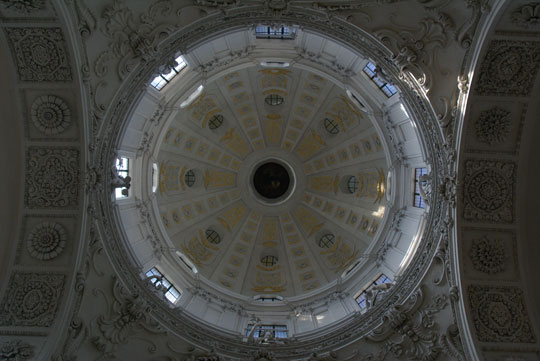
The interior of the Church was developed in it's current Baroque
form between 1757 and 1792 and was developed from 1689 onwards
with sculptures by Jakob Müsl, the frescoes on the ceiling
by J. Hauzinger and FX Sttrattmann - both of whome followers
of Troger. Several altarpieces are by Troger. Several altars
between 1770 and 1774 are buy Johann Georg Dorfmeister.
A renovation of the interior took place during the 1980's
and the exterior in the 1990's.
The construction of the underground in Mariahilferstraβe
- which coincided with the renovation of the interior in the
1990's - caused the Church towers to lean towards Mariahilfer
Straβe and the nave began to drift towards to Gumpendorfer
Straβe. Four steel anchors were installed which have joined
the nave and the towers together permanantly after co-operation
between the parish, Archbishopric, the Vienna municipality
and the underground construction people.
The Mariahilf Picture of the Virign Mary is a rough copy of
the original in Passau by Lukas Cranach senior between 1520
and 1530. The painting portrays Madonna as Theotokos Glykophilousa.
The painting is attributed with miraculous powers and many
thousands processed to venerate the Virign Mary in the 19th
Century.
It is from this picture that this district of Vienna is
named.
The Church of Mariahilf is at Mariahilfer Straβe 55,
Vienna. The website is at www.pfarremariahilf.at.
Vienna - Church of Mariahilf
When the Church of Mariahilf was completed it became the parish church for Order of the Barnabites in acknowledgement to their contribution to the building process. The Salavtorians took over the church during the 1930's. Since 1997 the Church has been run by the Michaelite Fathers who continue to run the church until the time of writing (2007.)
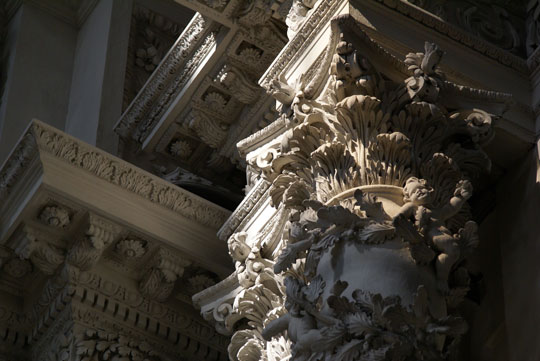
The interior of the Church was developed in it's current Baroque form between 1757 and 1792 and was developed from 1689 onwards with sculptures by Jakob Müsl, the frescoes on the ceiling by J. Hauzinger and FX Sttrattmann - both of whome followers of Troger. Several altarpieces are by Troger. Several altars between 1770 and 1774 are buy Johann Georg Dorfmeister.
A renovation of the interior took place during the 1980's and the exterior in the 1990's.
The construction of the underground in Mariahilferstraβe - which coincided with the renovation of the interior in the 1990's - caused the Church towers to lean towards Mariahilfer Straβe and the nave began to drift towards to Gumpendorfer Straβe. Four steel anchors were installed which have joined the nave and the towers together permanantly after co-operation between the parish, Archbishopric, the Vienna municipality and the underground construction people.
The Mariahilf Picture of the Virign Mary is a rough copy of the original in Passau by Lukas Cranach senior between 1520 and 1530. The painting portrays Madonna as Theotokos Glykophilousa. The painting is attributed with miraculous powers and many thousands processed to venerate the Virign Mary in the 19th Century.
It is from this picture that this district of Vienna is named.
The Church of Mariahilf is at Mariahilfer Straβe 55, Vienna. The website is at www.pfarremariahilf.at.
View Larger Map
Primary source: Pamphlet available at the Church of Mariahilf.
Related posts